Home Alone with a Tradesperson? How to Stay Safe
Most tradespeople are professional, respectful and trustworthy.
But when someone comes into your home, especially if you are alone, it can be unnerving, and it is completely reasonable to think about personal safety.
At Streetwise Defence, we have heard from women after frightening incidents involving tradespeople, including intimidation, threatening messages, boundary-crossing behaviour and even sexual assault.
Even given everything I have learnt through Streetwise Defence, I still follow the tips in this article – especially number 5, which I think is a game-changer!
This article is about helping you feel more prepared, more confident and more able to set boundaries in your own home. I hope you find it helpful, and if you want to learn more, check out our free safety tips – link at the end.
Why can having tradespeople in your home feel uncomfortable?
When you stop and think about it, having a trade coming into your home is a big deal.
We’re talking about an unknown man coming into your home, your private sanctuary, alone with you, in a confined space, with no one else around.
It’s no wonder women feel nervous about this, particularly when some trades have a bad reputation for ripping off vulnerable people and for things like catcalling. (Like many women, my own discomfort around some tradesmen started young - a group of builders made my teenage walks to school miserable with the lewd things they shouted at me daily.)
They also know where you live, may well be physically stronger than you, AND they control access to the essential work or repairs you need doing.
So, we know why we feel nervous about having a tradesperson come into our homes; now let’s look at practical ways to stay safer and alleviate some of that fear.
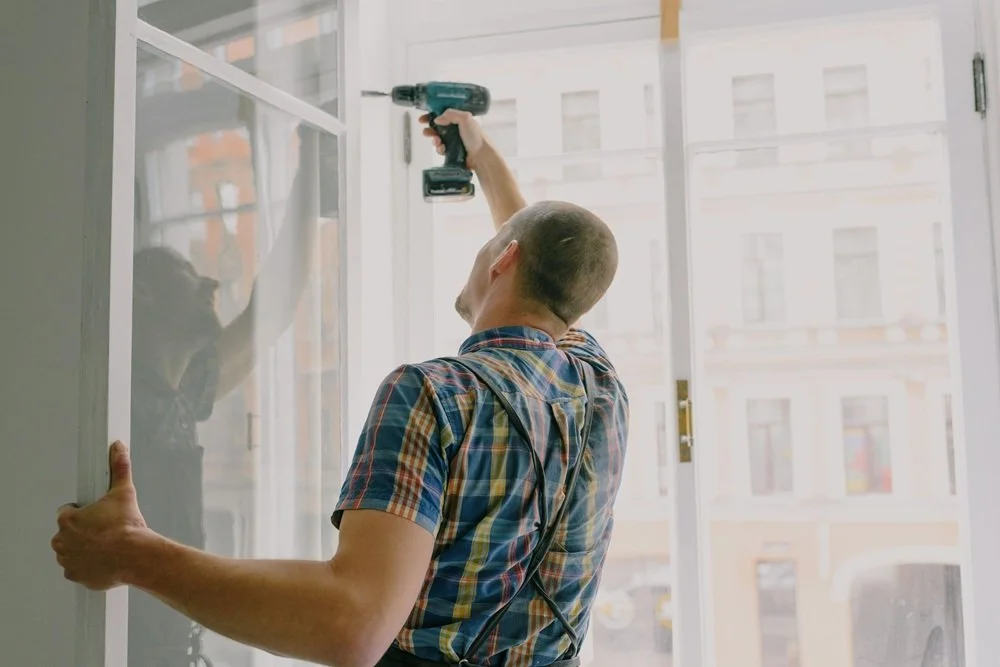
Having a tradesman come into your home can be unsettling, but there are things you can do to stay safer
Before They Arrive
1. Choose the tradesperson carefully before they come to your home
Finding a reliable, good quality tradesperson is a challenge in itself but you also want one who is respectful and trustworthy.
The best way to find one is by personal recommendations where possible - but don’t stop there!
A recommendation is a good starting point, but it is not a full safety check.
Before booking, check:
Do they have a proper business name, website or online presence?
Are there genuine reviews from more than one source?
Are they registered where needed, such as Gas Safe for gas work or a recognised electrical scheme for electrical work?
Do they have public liability insurance?
Will they provide a written quote or estimate?
Does the quote come from a proper business email or on headed paperwork?
Are they happy to confirm the work, cost and payment terms in writing?
A professional tradesperson should be used to being asked these questions. If they make you feel difficult for asking basic checks, take that seriously.
And even then, still be on your guard. We heard from one lady who found her trade via two personal recommendations and still experienced problems with him sending aggressive and threatening texts when plans changed.
2. Get the details in writing
Before they come to your home, ask for the basics in writing.
This might include:
Their full name and business name
The time they are arriving
What they are coming to look at or do
This protects you practically, but it also creates a clearer professional boundary from the start.
A genuine tradesperson should not be offended by basic questions.
If someone becomes defensive, pushy or rude before they have even entered your home, that is useful information.
3. Tell someone who is coming and when
Before the appointment, message someone you trust.
Send them the tradesperson’s name, number, company name if you have it, and the time they are due to arrive.
You could also arrange a simple check-in afterwards.
For example:
“I’ve got an electrician coming at 10am. I’ll message you when he’s gone.”
This isn’t overreacting, it’s basic personal safety – the equivalent of ‘text me when you get home.’
4. Avoid saying you live alone
This is huge. Remember - you do not need to tell a tradesperson anything about your life or home situation.
Avoid saying things like:
“I live alone.”
“My partner is away.”
“No one else will be back until tonight.”
Use neutral language instead or use deception and tell a lie - assuming they don’t already know you:
“I’ll need to check before confirming.”
“We’re still deciding what to do.”
“I’ve got someone else looking at this too.”
Even if you do live alone, you do not owe that information to anyone.
I once had a decorator come and paint my house over the course of 3 weeks. The entire time he was there, he was under the impression that I lived with someone, and he kept missing them. When, actually, I lived alone at that time.
5. Get a big pair of men’s shoes and put them at the front door
OK, this is my best tip, and I think it's the game-changer when a trade enters your home.
Go and buy the biggest pair of men’s shoes you can find and put them by your front door.
You don’t need to spend a lot of money; they could be cheap Croc-style shoes or trainers from a charity shop.
The point here is that when the trade comes in and takes off their shoes at your front door, they look down and see the rather large shoes next to your smaller ones.
Without saying anything, they receive the signal loud and clear that you are not alone and the man in your life is big and not to be messed with.
Think of it as a visual deterrent from one male to another.
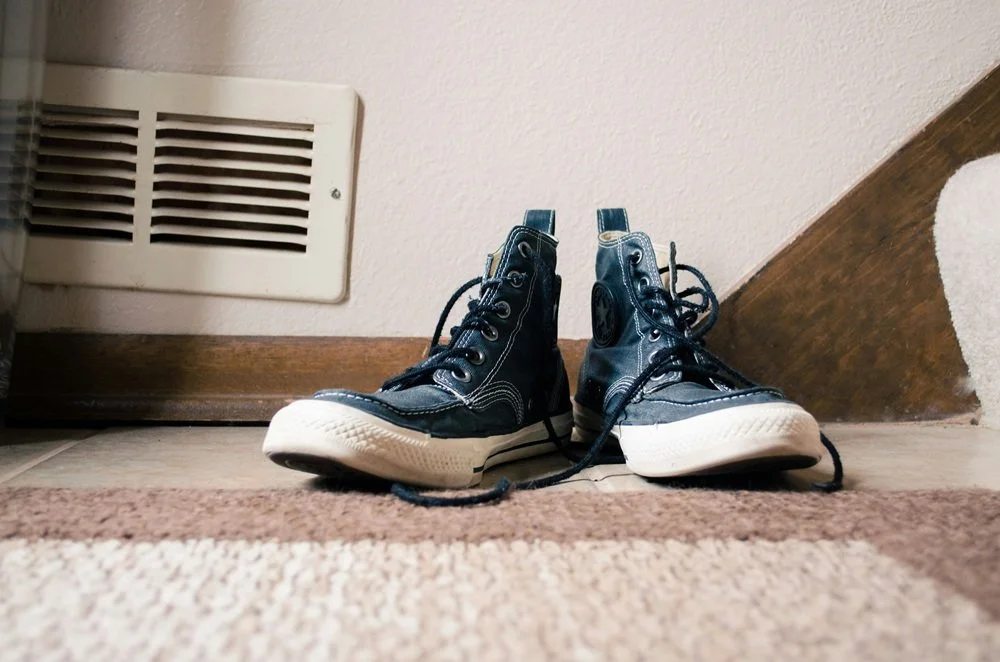
Men’s shoes by the front door, it really does work
It might not sound like a big deal, but the kind of man who would try it on with a woman would take notice of this.
Now, I know we shouldn’t have to do any of this. And it might bother you, especially if you are single, a feminist or in a relationship with a woman. However, try to think of it as a really useful prop or a bit of theatre.
The point is not that you need a man to protect you. The point is that visual cues can change how a potential predator reads the situation.
If someone is looking for an isolated woman, the suggestion that another male may be present can act as a deterrent.
And if you want to take it a step further, put some men’s pants on the radiators and a t-shirt or hoodie over a chair.
Dene told me this years ago when I told him how nervous I got when I had tradespeople in the house. I have used this many times, and trust me, they notice the shoes!
He always jokes that if anyone asks, say they’re size 13 because he’s a rugby player. It creates a quick visual story without you having to say a word.
While they are in your home
6. Make it obvious your home is not isolated
You can also make visible security cameras, a doorbell camera or indoor camera obvious if you have them.
The point is not to secretly record someone. The point is that visible cameras make it clear there may be a record of who entered, when they arrived, and how they behaved.
7. Stay polite, but professional
This is big too! Many women are programmed to be friendly, helpful and accommodating, especially in their own homes.
But you don’t need to over-host! This is your permission to be polite but cool and to leave them to it.
You don’t need to chat to them. Or answer questions about your personal life. Or give them any snack or refreshment other than offering a drink.
You can be kind without giving someone access to you.
Useful phrases:
“Thanks, I’ll leave you to it.”
“I’m going to be working in the other room.”
“Let me know if you need access to anything.”
This isn’t about being cold or rude. It’s about keeping the relationship clear: they are there to do a job, and you are allowed to keep professional boundaries in your own home.
8. Keep your phone with you
Be prepared should you need to seek help and always keep your phone with you.
Before the appointment, make sure it has charge and signal.
You may also want to know how to use Emergency SOS on your phone.
This is important if you start to feel uneasy, need to message someone quickly, or want to make it clear that you are not isolated.
It’s also a good get-out if they start chatting to you – just say “I need to go and answer this text now”.
9. Think about where you stand
When we teach self defence, a big part of it is situational awareness. By this we mean being aware of where you are, what and who is around you, the atmospherics of a situation and your escape route.
When you are at home, think about where you stand when you are talking to the tradesperson.
Try not to let yourself be boxed into a small room, loft, cellar, garage, narrow hallway or corner.
Stand where you can leave easily and keep your exit route clear.
If they need to show you something in a confined space and you do not feel comfortable, you can say:
“Can you take a photo and show me here?”
or
“I’ll get someone else to look at that with me later.”
You don’t have to follow someone into a space that makes you feel trapped.
10. Leave your doors unlocked – *just for the appointment*
In a worse-case scenario, such as an attempted assault, you may need to get out of your home quickly and you don’t want to be fumbling around for keys in a high-adrenaline situation.
Ensuring your front and back doors are unlocked just before the appointment means you can easily do this.
Then lock them both straight afterwards.
Obviously, be aware that while your doors are open there is a risk someone else could enter.
You could even prop your back door open, if you have one, and have the windows open, meaning your neighbours could potentially hear what is happening.
I’ve done this on a few occasions, and it does make a difference to how you feel - much less confined and more connected to other people.
11. Watch for red flags
Most tradespeople will be professional.
But red flags include:
Asking if you live alone
Making comments about your appearance
Asking personal or sexual questions
Ignoring your boundaries
Pressuring you to make a quick decision
Turning up without an appointment
Refusing to put things in writing
Becoming shifty or angry when questioned
Mentioning that they know where you live
Sending repeated, abusive or threatening messages
We have also heard from women who felt pressured by someone after making an enquiry - repeated calls, pushy texts, chasing for a decision, or making them feel uncomfortable for not committing. That is a red flag too. If someone is already ignoring your boundaries before you have booked them, listen to that.
One red flag does not mean you are definitely in danger, but it does mean you should pay attention.
Your gut instinct is a powerful protector – you can sense a person’s energy when they are near you and if it feels off, listen to it.
Never tell yourself you are being silly.
Yes, it is a total pain to find another trade, but it is better to be safe.
If something feels wrong
12. Have a ‘get-out’ phrase ready if you feel uncomfortable
Thinking about this in advance really matters because many people freeze when something feels wrong.
Having a get-out phrase or plan ready and in the back of your mind makes it easier to act should you ever need to.
To make things safer for you, we recommend making an excuse rather than saying you don’t want to go ahead or asking them to leave.
Try:
Looking at your phone as if getting a message and saying “Oh I’m so sorry, I’ve just had an emergency message and I need to go out.”
“Really sorry but I’m not feeling at all well, I think I’m going to be sick. I’ll get my husband/partner/brother to call you another day to pick this up.”
Don’t over-explain; it is your home and if you want them to leave that is fine.
We recommend having an excuse ready rather than trying to explain that you feel uncomfortable. You can deal with the cancellation later, in writing, once they are no longer in your home.
13. If you cancel the job, keep it short
If you decide not to go ahead, put it in writing and keep it brief.
Example:
“Thank you for your time. We’ve decided not to go ahead with the work. Best wishes, [Name].”
Don’t get drawn into long explanations or feel you need to justify your decision.
14. If they become abusive or threatening, save everything
If a tradesperson sends threatening, intimidating or abusive messages, take it seriously.
Especially if they mention that they know where you live, know you are alone, or imply they may come back.
Keep a record of everything and save:
Text messages
WhatsApp messages
Emails
Voicemails
Call logs
Screenshots of their profile or business page
Tell someone you trust and ask for support.
If you feel in immediate danger, call 999.
If it is not immediate but you are concerned, contact 101.
You can also report rogue or intimidating traders through Citizens Advice or Trading Standards.
15. What if you were friendly and they crossed the line?
This section is really important.
Being friendly does not make you responsible for someone else’s behaviour.
Making someone tea, chatting, smiling, being kind, or trying to make someone feel welcome does not give anyone permission to harass, threaten, touch or assault you.
The lesson isn’t “don’t be friendly.”
The lesson is:
You can be friendly and still have boundaries.
You can be polite and still say no.
You can be kind and still ask someone to leave.
You can change your mind.
You can stop a conversation.
You can put your safety above politeness.
16. Learn what to do if things turn physical
Most of the tips in this article are about prevention, boundaries and reducing risk.
But it is also worth asking yourself:
Would I know what to do if someone grabbed me, blocked my way or tried to hurt me?
You do not need years of martial arts training to learn simple, practical self defence skills.
Even a basic understanding of target areas, how to create space, and how to escape can make you feel more prepared and less helpless.
That is why we created our Self Defence Essentials online programme. In under an hour, you can learn the core principles of personal safety and simple physical self defence skills you can use as a last resort.
Final reminder
Most tradespeople are decent, professional people who just want to do the job and go home but as with everything, there are some that want to take advantage.
Being prepared, confident and aware are often the best ways to safe and putting the tips in this blog into action should really help you with that.
Your home is your safe space. You are allowed to decide who comes in, how long they stay, and what behaviour you will or will not accept.
Want more personal safety tips?
Download our free 50 Street Safety Tips guide for simple, everyday advice to help you feel more aware, prepared and confident.
Plus, access 30% off our online self defence courses.
FAQs: Staying Safe with Tradespeople at Home
Is it rude to ask a tradesperson for a written quote or insurance?
No. A professional tradesperson should not be offended by basic checks. You are inviting someone into your home, so it is reasonable to ask who they are, what company they work for, and whether they have the right insurance or registration for the job.
What should I do if a tradesperson makes me uncomfortable?
Trust your instincts. Keep your phone with you, avoid being trapped in a confined space, and use a simple excuse to end the appointment if needed. You can deal with any cancellation or complaint later, once they have left.
Should I tell a tradesperson I live alone?
No. You do not owe them personal information about your living situation. Use neutral language such as “we’re still deciding” or “I’ll need to check before confirming.”
What should I do if a tradesperson sends threatening messages?
Don’t argue back. Save screenshots, call logs, voicemails and any business details. Tell someone you trust. If you feel in immediate danger, call 999. If it is not immediate but you are concerned, contact 101.
Can I ask a tradesperson to leave my home?
Yes. It is your home. You are allowed to end an appointment, pause the work, or ask someone to leave if you feel uncomfortable or unsafe.